Umbrella Ribs Explained: Fiberglass vs Steel vs Aluminum

The canopy gets the compliments. The ribs do the work. Those thin struts running from the hub near the handle out to the tips hold the fabric taut and pass wind pressure down to the shaft. When an umbrella dies, a rib usually failed first: a kink near the joint, a split tip, a rusted pocket that finally gave way.
Three materials show up again and again in umbrella frames — fiberglass, steel, and aluminum — and they behave very differently in wind, on your wrist, and on the repair table.
What ribs actually do
A typical umbrella has six to sixteen ribs, each running from the hub to a canopy tip. On many models a shorter stretcher strut connects each rib to the runner on the shaft; that's the piece that pushes the frame open and holds it there.
Two details change everything:
- Rib count. Eight ribs gives a squarer, lighter canopy. Ten to sixteen ribs give a rounder shape and better fabric support, at the cost of weight and a stiffer feel.
- Single vs double ribs. Many wind-resistant umbrellas use two ribs per panel — a main rib plus a supporting rib — so the canopy can flex inward instead of flipping.
Rib material sits on top of all this. It decides how the frame bends under a gust and whether it springs back.
Fiberglass ribs: flex and forgiveness
Fiberglass is what most makers reach for when they advertise wind resistance, and for good reason. A fiberglass rib bends under pressure and returns to shape. Push it hard and it curves like a fishing rod; let go and it snaps back. That's exactly what you want when a gust hits as you round a corner.
The trade-offs are weight and repair. Fiberglass ribs usually feel a little heavier in hand than the lightest aluminum frames, and they resent being forced. In deep cold the material stiffens, and a rib that would flex on a mild day can snap instead. Once a fiberglass rib cracks, it's done.
Replacing one is a swap rather than a repair. You can often buy rib sets, or pull a matching rib out of a dead umbrella of the same model.
Steel ribs: stiff, strong, heavy
Steel is the traditional choice and still common in budget folding umbrellas. It's stiff, it holds its shape, and it's cheap to produce. In a compact umbrella that lives in a bag, that stiffness feels reassuring.
The problems are weight and rust. Steel ribs add real grams to a frame you'll carry all day, and painted or plated steel eventually loses that coating — especially if you put the umbrella away wet. Once rust starts at a joint or pocket, the rib weakens exactly where stress is highest.
Steel does have one advantage: it can sometimes be straightened. A bent rib can be coaxed back with gentle pressure, though it will be weaker at the bend. Do that once and expect the umbrella to fail sooner.
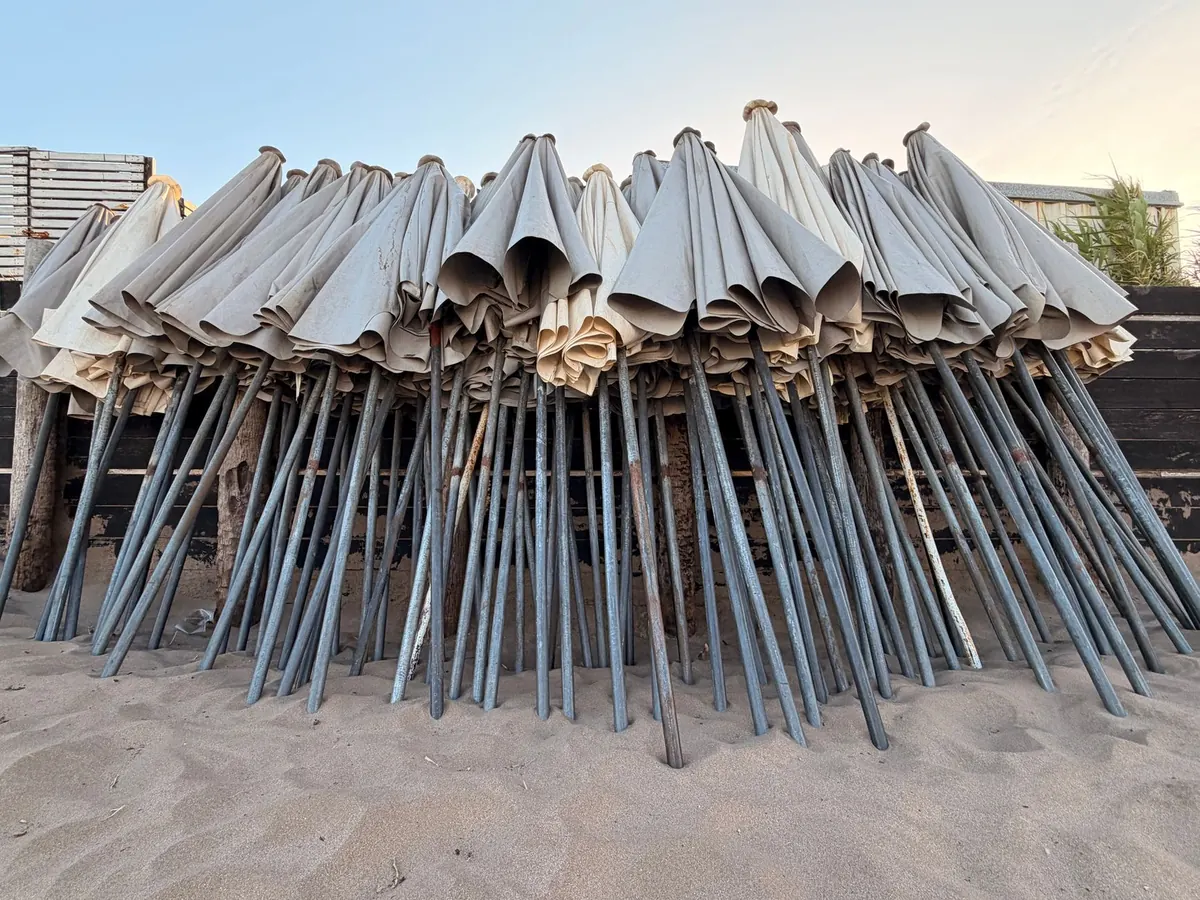
Steel makes more sense where weight doesn't matter — large patio or market umbrellas, where a heavier frame is a stability feature rather than a burden.
Aluminum ribs: light on the wrist
Aluminum is the lightest of the three in common umbrella construction, and it doesn't rust. It forms a thin oxide layer that protects the surface, which is why aluminum frames survive damp storage far better than steel.
But aluminum bends and stays bent. Where fiberglass springs back, aluminum takes a set. A rib folded backward in a gust will likely return as a permanent kink, and bending it straight again usually leaves a crease. Repeat that a few times and the metal fatigues and cracks.
Cheap aluminum cuts both ways. Thin-wall ribs keep weight and cost down, but they dent easily at the hub end, where the frame takes the most load. Better frames use aluminum for the shaft and fiberglass for the ribs — low weight plus real flex.
Wind resistance, honestly
Rib material isn't the whole story. Venting, canopy tension, and frame shape matter just as much. A well-built eight-rib fiberglass frame will outlast a poorly made aluminum one every time.
What material does change is how the umbrella fails:
- Fiberglass flexes, sheds the gust, and returns to shape — until it cracks.
- Aluminum bends inward and keeps the bend, leaving a lopsided canopy.
- Steel resists the gust, then kinks or snaps at the weakest joint.
If you walk through city wind regularly, fiberglass or a hybrid frame is worth the extra weight. If your umbrella mostly lives in a car or bag and opens a few times a month, aluminum is fine and easier on your shoulder.
Repairing a broken rib
None of these materials is difficult to work with if you're patient. Most repairs mean swapping the rib, not welding anything.
- Open the umbrella and measure the damaged rib from hub to tip. Note whether it's single or double.
- Check how it's attached: sewn canopy pocket, tie, rivet, or screw. Take a photo before you touch anything.
- Free the canopy at the pocket if you need slack, working slowly so you don't tear the fabric.
- Slide out the old rib, fit the replacement, and reattach it in the same position.
- Open and close the umbrella a few times before you trust it in rain.
Spare ribs are often available from the manufacturer for popular models, and a donor umbrella from the same line is the simplest source. If the rib is riveted at the hub and you don't have the tools, that's a repair-shop job — or a good reason to buy a model known for replaceable parts.
Choosing ribs that match how you use your umbrella
Forget the material label for a moment and think about your habits. If you walk in exposed wind, choose flex: fiberglass ribs, a vented canopy, eight to ten ribs. If you want something that disappears into a bag, choose light: aluminum ribs, and accept that a hard gust may bend one for good. If the umbrella stays put and you don't carry it far, steel is still sensible.
Whichever you pick, dry it open before storing it. Rust and stiff joints kill more umbrellas than any gust.
Photo: Dzhem Salimov / Pexels